2026-08-29 ·
Hard Water and Your Water Heater: What Mesa Homeowners Need to Know
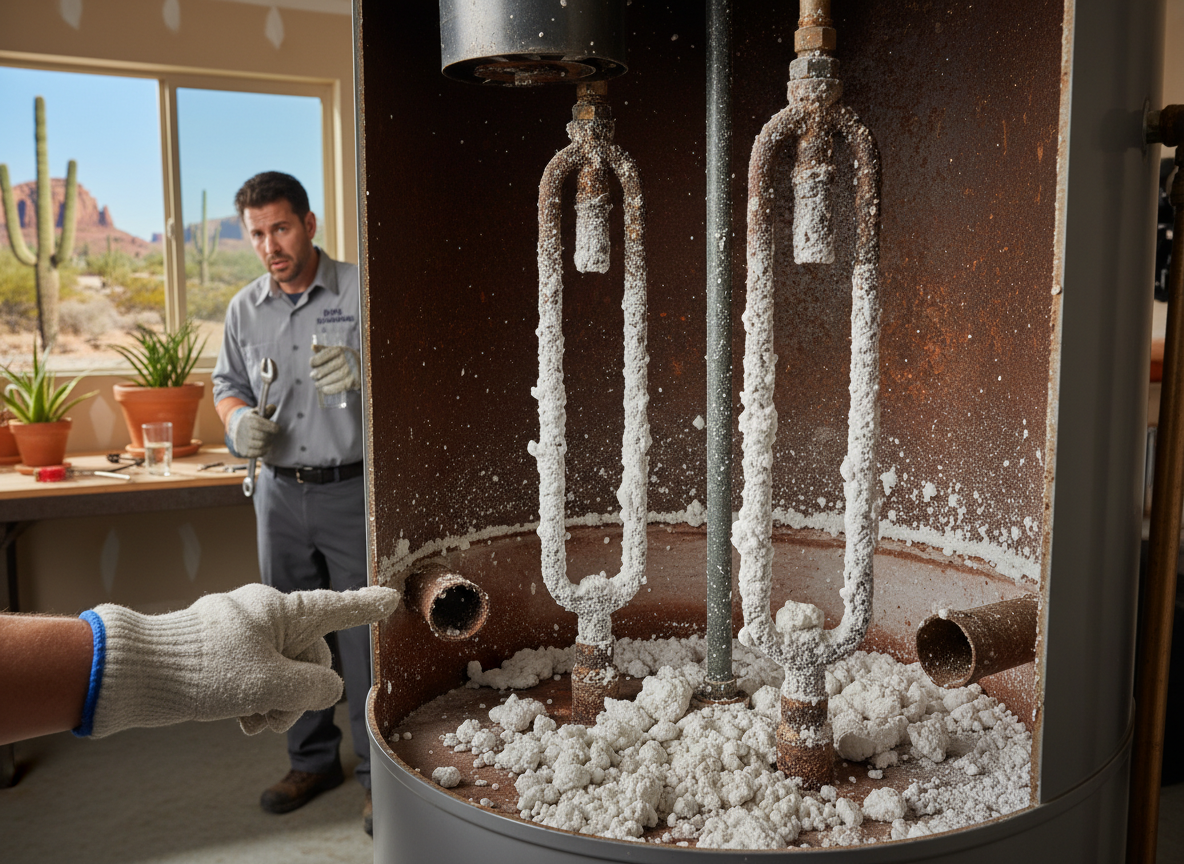
Hard water in Mesa accelerates mineral scale inside water heaters, lowering efficiency and shortening service life for homes across Maricopa County. The hot desert climate drives higher evaporation rates that leave more calcium and magnesium behind, so units in older housing stock near the Superstition Mountains often show problems sooner than those in milder climates.
How Mesa's Climate Concentrates Minerals
Mesa's extreme summer heat and low rainfall concentrate dissolved minerals in the municipal supply that feeds homes in Downtown Mesa, Red Mountain, and Superstition Springs. Water drawn from the same sources serving nearby Phoenix and Tempe carries higher total dissolved solids after passing through desert aquifers. Inside a water heater the temperature swing from incoming cool water to 120-plus degrees causes these minerals to precipitate as scale on heating elements and tank walls. Over time the layer insulates the element, forcing longer run times and higher energy use. Homeowners notice the difference first during peak summer months when daily hot-water demand rises and any efficiency loss shows up on utility bills.
Common Signs of Scale Buildup
Scale restricts flow and creates hot spots that stress tank seams or tankless heat exchangers. Watch for reduced hot-water volume at fixtures, longer recovery times after showers, or popping and rumbling sounds from a tank unit. In neighborhoods with older housing stock these symptoms appear earlier because galvanized or copper lines already carry some mineral load. A visual check at the drain valve often reveals white or beige flakes that confirm the issue before efficiency drops further.
Effects on Standard and Tankless Units
Traditional tank models in Mesa homes collect sediment at the bottom that mixes with scale and blocks the dip tube or burner area. Tankless systems suffer more on the heat exchanger plates where narrow passages clog quickly, raising outgoing water temperature swings. Both types benefit from periodic flushing, yet the desert water chemistry means intervals shorter than those recommended for softer-water regions. Linking to related guidance helps: see Tankless Water Heater Repair in Mesa: Common Issues and Fixes for model-specific details.
Practical Steps Homeowners Can Take
Flush the tank or run a vinegar solution through a tankless unit every six to twelve months depending on observed flow loss. Install a whole-house sediment filter or point-of-use scale inhibitor at the cold-water inlet to slow new deposits. Check the anode rod on tank models annually and replace it when more than half the diameter is gone. These steps keep performance steady without requiring immediate replacement and apply equally to homes in Superstition Springs or closer to Riverview Park.
When Professional Service Makes Sense
Persistent low flow, discolored water, or error codes on tankless units signal that scale has moved beyond homeowner maintenance. A technician can perform a powered descaling that restores heat transfer without damaging components. For urgent issues after hours, Mesa Water Heater Repair provides Mon–Sun: 24/7 Emergency Service. Readers facing repeated problems may also review Water Heater Repair or Hard Water Damage Repair pages for next steps.